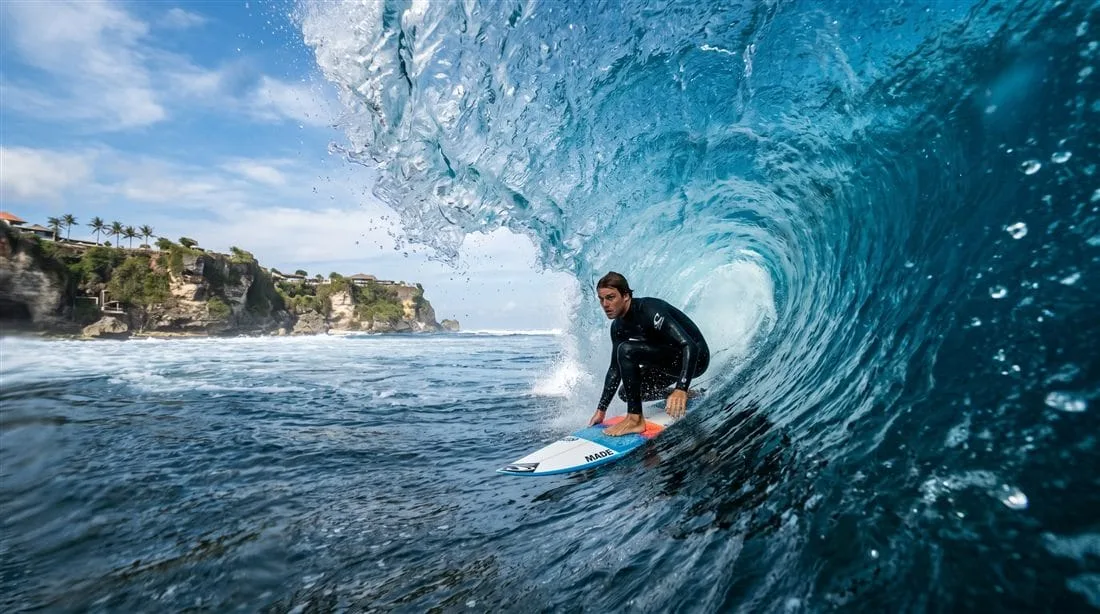
Kuta Beach is where most people in Bali catch their first wave, and there's a good reason for that. The wave is forgiving, the bottom is sand (not reef), and there's a surf school every fifty metres along the sand.
It's still one of the best places on the island to learn. The catch: go in with the right expectations and don't overpay.
This is the honest rundown. It covers why Kuta works for beginners, what a lesson actually costs in 2026, what happens in those two hours, when to go, and how to pick an instructor who'll actually get you standing up.
Why Kuta Beach is the best place to learn
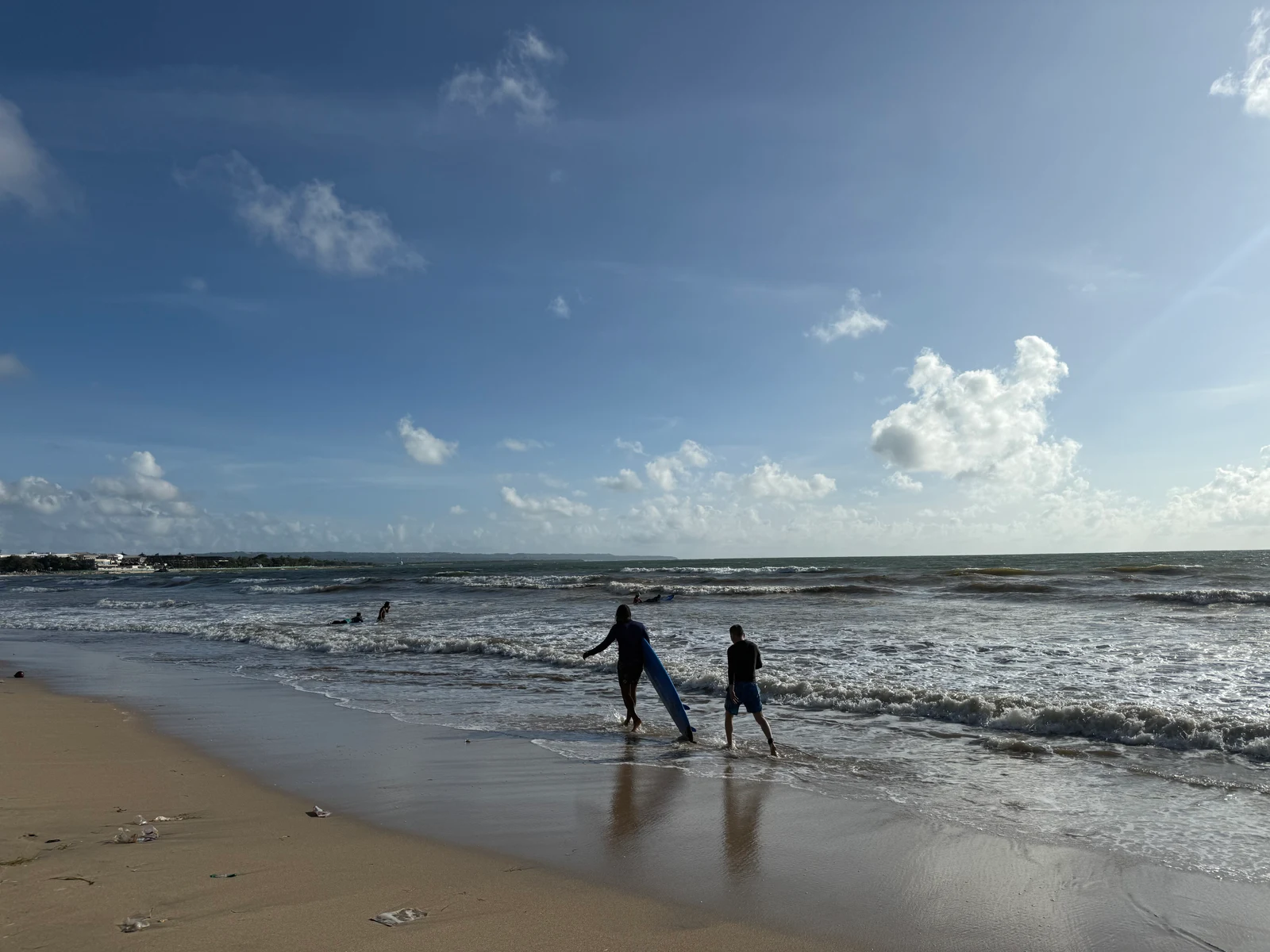
Kuta Beach is beginner-friendly because the wave breaks over a flat sandy bottom, with no reef and no sharp rocks. The wave here is a soft, slow-rolling whitewash.
Not all surf spots are this forgiving. Many first-timers get talked into reef breaks that are genuinely dangerous if you can't yet control a board.
Kuta is the opposite. When you fall (and you will fall a lot on day one), you land in sand and water, not coral.
A few more things make it ideal for learning. The beach shelves gently, so you can stand and walk your board back out instead of fighting a current. Lifeguards patrol the marked swimming-and-surfing zones behind the red-and-yellow flags.
The sheer number of schools means there's always gear to rent and an instructor free. It's also a long beach, so on a busy morning you can walk south past the Waterbom side to find a cleaner, less crowded peak.
What a lesson costs in 2026
A Kuta surf lesson starts at about USD $18 for an hour, and the more time you book the better the rate — a 2-hour lesson is around $30 rather than the full $36. The exact price shifts a little with the beach, the instructor and the day's conditions, so think of it as Andrew's honest local rate, not a fixed menu. The board and a rashguard are almost always included, so you shouldn't be paying extra for either.
Prices are a little negotiable, especially if you book more than one session. As a guide:
- 1-hour lesson: from about USD $18, board and rashguard included.
- 2-hour lesson: around USD $30 — a discount on the hourly rate, and the sweet spot for most beginners.
- Multi-day packages: 3–5 sessions booked together bring the per-lesson price down noticeably.
- Board rental only (once you can stand): a soft-top by the hour from a beach vendor, cheaper again.
What you're really paying for is the instructor's attention. Wave time per person is what gets you standing up.
A cheap lesson in a group of eight is worse value than a slightly pricier one in a group of three. If someone on the beach quotes you a price that seems too low, ask how many people are in the group before you agree.
Want a vetted instructor at the local price — not the walk-up tourist rate? Andrew can book your Kuta surf lesson and make sure the group stays small.
Book my lesson 🤙What actually happens in a 2-hour lesson
A typical two-hour beginner lesson runs in four stages: a beach briefing, time in the whitewash, your first stand-ups, then rest and repeat. Here's the shape of it so nothing catches you off guard:
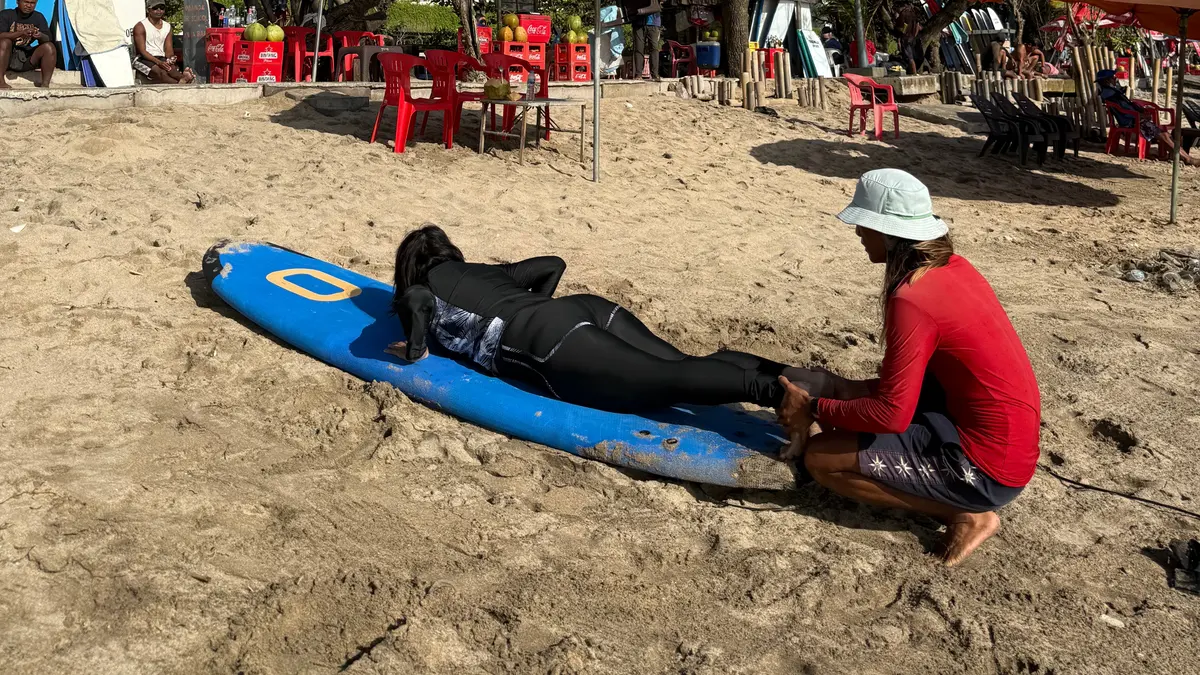
- Beach briefing (10–15 min): safety, how to fall, where to surf, and the pop-up — the move from lying down to standing — practised on the sand first.
- Into the whitewash: you start in the broken, foamy water close to shore, not out the back. The instructor often pushes you into the wave and steadies the board.
- Standing up: most reasonably fit first-timers get to their feet at least once or twice within the two hours. It won't be graceful. That's normal.
- Rest and repeat: paddling is the tiring part, so you'll take breaks. Two hours is about right before your arms give out.
Don't measure success by how long you ride. Measure it by whether you stood up and want to come back tomorrow. Almost everyone does.
Best time of day & season to paddle out
The best time to surf Kuta is early morning, around 7–9 AM, before the wind picks up and the crowd arrives. Timing changes the experience more than people expect, so going early is the single best decision.
- Early morning (around 7–9 AM): the water is cleanest, the wind hasn't picked up, the crowd is thin and the light is soft. This is the window I send everyone to.
- Mid-afternoon: busiest and windiest — avoid it for a first lesson if you can.
- Dry season (April–October): the most consistent conditions and the cleanest water for learning. The wet season still works, but expect more variable days.
- Tides: a good instructor reads the tide for you, but mid-to-high tide generally gives the gentlest beginner whitewash at Kuta.
How to pick a good instructor (and avoid a bad one)
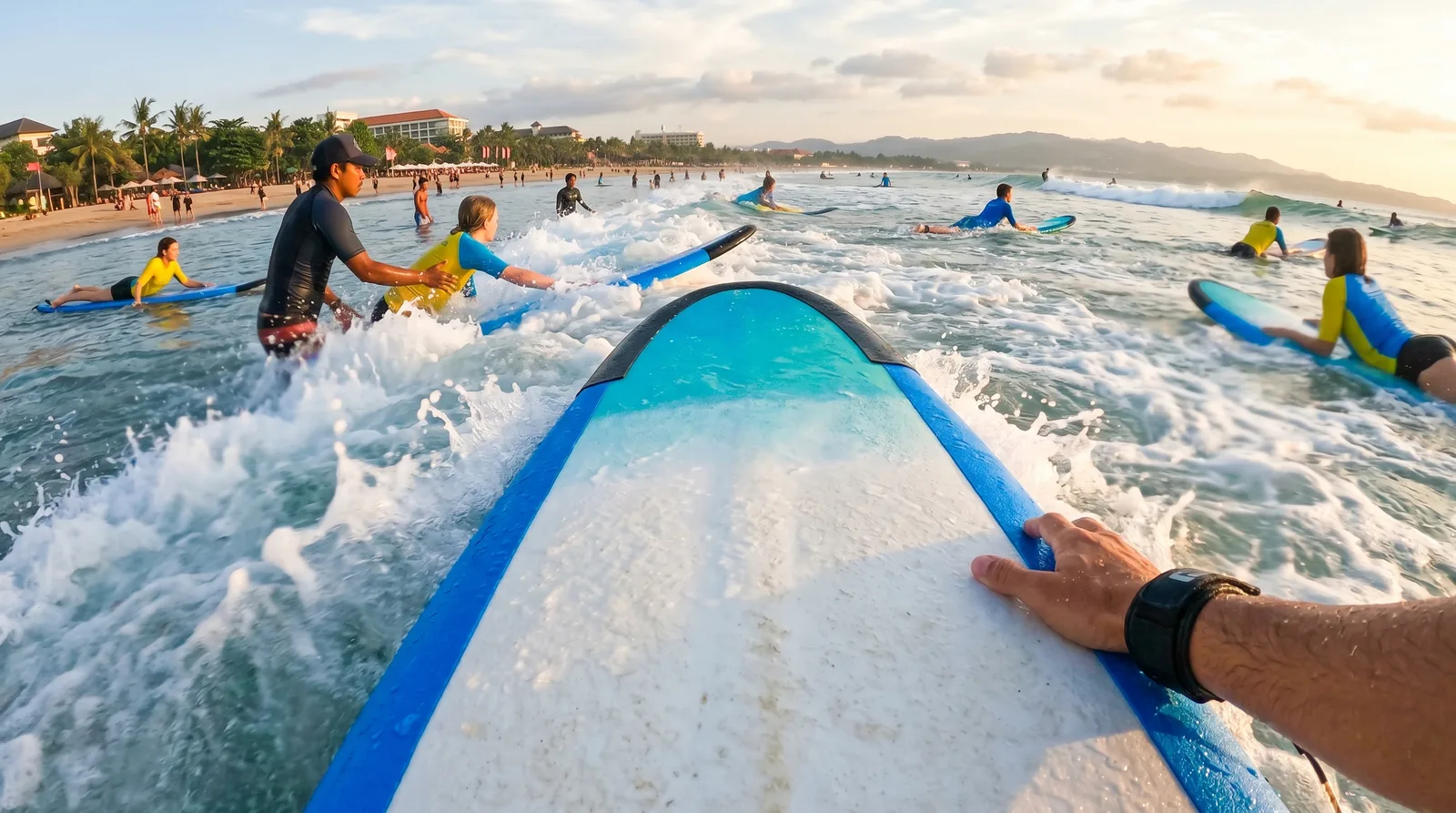
A good surf instructor keeps the group small, stays in the water with you, and is honest about the conditions. The gap between a great first lesson and a frustrating one is almost entirely the instructor: their patience, their English, and how many people they're watching at once.
Here's what to look for:
- Small groups: three or four max. More than that and you're mostly waiting, not surfing.
- Patience over hype: a good instructor stays in the water with you, reads the conditions and matches the wave to your level — not someone who pushes you into one wave and disappears.
- Clear communication: enough English (or your language) to coach you in the moment, not just before you paddle out.
- Honest about conditions: if it's too big or messy for a first timer, the right call is to wait or move down the beach — the good ones say so.
Red flags: heavy upselling on the sand, no rashguard or leash offered, a group of eight people, or being rushed. If it feels like a conveyor belt, walk fifty metres and find a better school. You can also message me and I'll point you to instructors I've actually watched teach.
What to bring and wear
- Reef-safe sunscreen — you're in the equatorial sun for two hours; a zinc stick for your face won't sweat off.
- A rashguard (usually provided) and board shorts or a one-piece you can move in — nothing that'll come loose in the whitewash.
- Water and a small towel. The beach vendors sell cold coconuts right there.
- Leave valuables at the hotel. Bring only what you can lock up or hand to a trusted instructor — don't leave a phone and wallet on the sand.
Not sure about group vs private? Tell Andrew your level and dates and he’ll set up the right lesson — gear and pickup included.
Set it up 🤙Group vs private — which to choose
Choose a group lesson to save money, or private to progress faster. The extra USD $10–15 for private buys you a lot more correction and a lot more wave time.
If you're travelling with friends and just want a fun morning in the water, a small group lesson is great and cheaper. If you specifically want to progress, to be paddling into your own waves by the end of a few days, a private or 1-on-2 lesson is the better spend. Couples and solo travellers who want to actually learn usually get more out of private.
After Kuta: where to surf next
After Kuta, the natural next steps are the gentler green waves at Legian and Seminyak just up the beach, and then the mellow, social peaks at Old Man's in Canggu. This is the progression once you can pop up consistently in the whitewash and turn the board.
Kuta or Canggu for your first lesson? For your very first time, choose Kuta. The wave is softer, the bottom is forgiving sand, and you can stand up and walk the board back out between goes. Canggu gets a lot of hype for beginners, but several of its best-known breaks — Batu Bolong, Old Man's — sit over reef and rock, get crowded with more advanced surfers, and have longer paddle-outs. It's a great place to surf once you can already pop up and steer, just not the easiest place to learn the very basics. The honest order is simple: learn the pop-up and whitewash at Kuta first, then make the short trip up to Canggu when you're ready for unbroken green waves.
How long before you move on? Most people need a few sessions over a few days at Kuta before Legian or Canggu feels manageable — there's no rush, and trying to skip ahead usually just means a frustrating day in water that's over your head. Stick with the soft stuff until popping up feels automatic, and the step up will be far more fun than forcing it early.
The serious reef breaks, like Uluwatu, Padang Padang and Bingin, are for later. Save those for when you're confident and ideally with someone who knows the spot.
If you want the full breakdown of every break by skill level, read my Top 10 Bali surf spots guide so you don't end up paddling out somewhere above your level.
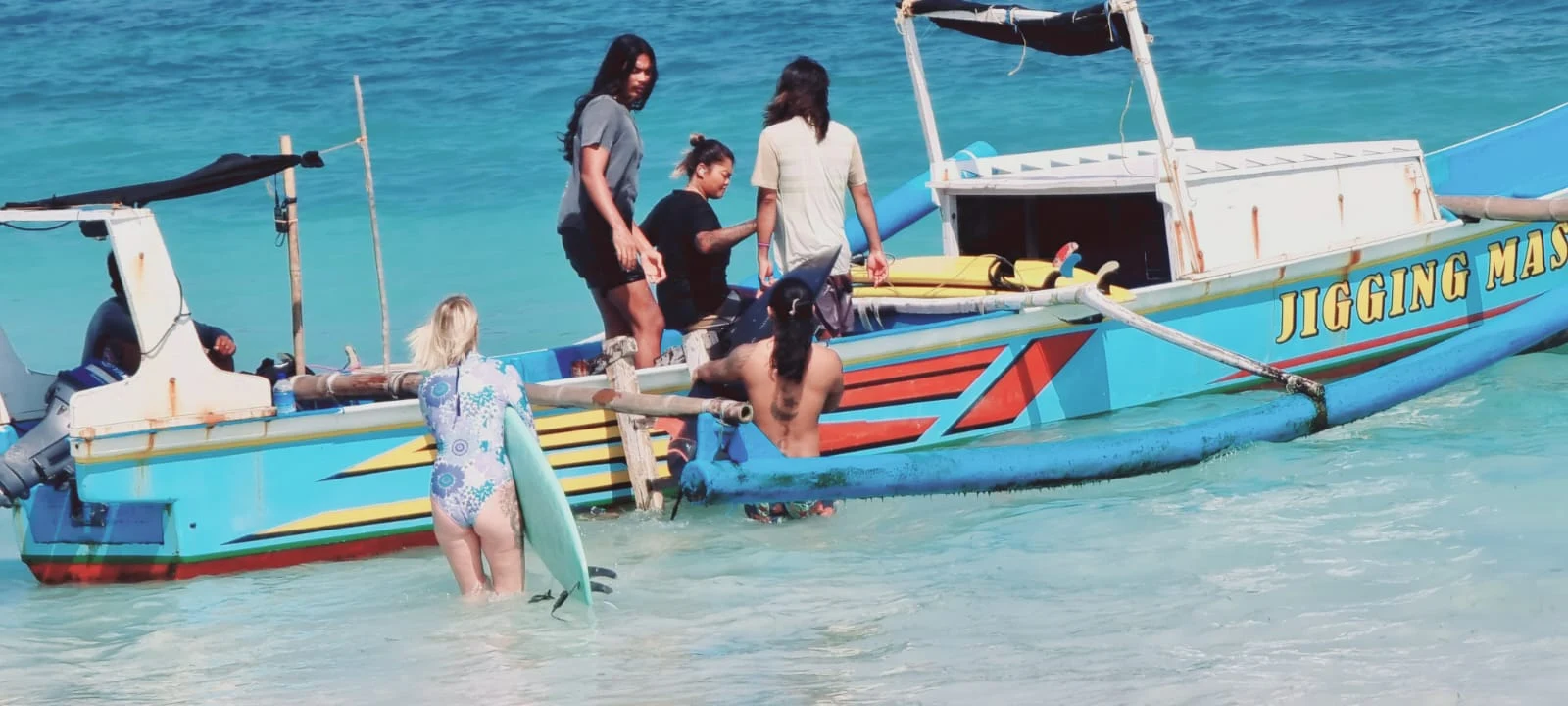
Andrew's take
My advice: start at Kuta, in a small group or private, early in the morning. It's cheap, it's safe, and it's genuinely fun.
I see two mistakes every week at Kuta. The first is booking the cheapest lesson without asking the group size, then spending two hours waiting for a turn. The second is a confident swimmer skipping the lesson entirely and going straight to a reef break further south, which is how people get hurt or wreck a rented board.
If you want me to line up an instructor I trust at the local rate, that's a quick WhatsApp away.
Frequently Asked Questions
Can a complete beginner surf at Kuta Beach?
Yes — Kuta's soft, slow whitewash over a sandy bottom is one of the best beginner setups in Bali, with lifeguards and schools all along the beach.
How much is a surf lesson in Kuta, Bali?
Lessons start at about USD $18 for an hour, and longer sessions come with a discount — a 2-hour lesson runs about $30, not the full $36. The exact rate shifts a little by beach, instructor and the day's conditions, so it's Andrew's honest local price, not a fixed menu. A board and rashguard are almost always included.
Do I need to book surf lessons in advance?
In peak season it helps, especially for private lessons. Otherwise you can usually arrange one on the beach the same day — or I can line up an instructor I trust.
How long until I can stand up?
Most reasonably fit first-timers stand up at least once in their first two-hour lesson. Being comfortable catching your own small waves usually takes a few sessions over a few days.
Is Kuta Beach safe for swimming and surfing?
Yes, within the flagged zones patrolled by lifeguards. Rip currents do exist, so always surf between the red-and-yellow flags and listen to your instructor about where to paddle out.
What should I wear for a surf lesson?
A rashguard (usually provided), board shorts or a swimsuit you can move in, and reef-safe sunscreen. Leave valuables at your hotel.
Is Kuta Beach good for beginner surfers?
Yes — its soft, sandy-bottomed whitewash is one of the most forgiving beginner setups in Bali, with no reef, lifeguards on the main stretch and surf schools all along the sand. It's where most people in Bali catch their first wave.
Where can you learn to surf in Kuta?
On the main stretch of Kuta Beach. The soft whitewash between the red-and-yellow flags is the learning zone, with surf schools and board rental every fifty metres along the sand. Message me and I'll line up a trusted local instructor on the calmest part of the beach at the local rate.
Is Kuta or Canggu better for a first surf lesson?
Kuta for your very first lesson — the wave is softer and the bottom is sand. Canggu (Batu Bolong, Old Man's) is a great next step once you're up and riding, but several of its breaks are over reef and better suited to improvers. Learn the basics at Kuta, then move on.
Can kids learn to surf in Kuta?
Yes — Kuta is one of the gentlest beaches in Bali for a child's first surf, and I arrange patient, kid-friendly instructors at the local rate. See my kids' surf lessons in Kuta guide for ages, safety and prices.