Most people come to me for surf and beach days in Kuta. The trip they remember, though, is the one up to the hills around Ubud — a morning under cold spring water at a temple, then an afternoon swimming under a waterfall in the jungle. If you want a long lunch with a view in the same day, the TIS Cafe menu and prices page covers what it costs up at Tegallalang.
It's the calmer half of Bali. Cooler air, green everywhere, and a slower pace than the coast.
This is how I plan that day for people staying in Kuta: what the water cleansing actually involves, which order to do things in, what to wear, and what the day costs once you factor in the drive. Real names, real prices — the day I'd actually set up for you.
Sebatu Holy Spring and Ubud Waterfalls in One Day
The area north of Ubud is built around water. Cold streams come off the volcano, feed the rice terraces, and surface again as spring temples and falls.
So the two sit naturally in one day. A spring temple is where you go inward and quiet. A waterfall is where you cool off, swim, and take the photos.
Doing one without the other feels half-finished. The cleansing on its own is short. A waterfall on its own is a lovely swim but a long drive for a single stop.
Put them together and you have a full, well-paced day away from the heat of the coast — the kind of day that makes the Kuta beach part of the trip feel like a different holiday altogether.
Pura Dalem Pingit Sebatu: A Quieter Holy Spring Near Ubud
The holy spring most tour buses head for is Tirta Empul, the famous purification temple, and by mid-morning the queue for its pools is long. The cleansing in this guide is not there. I take people to a quieter local spring instead: Pura Dalem Pingit Sebatu, in Sebatu village about 25 minutes north of Ubud, where it's mostly Balinese families rather than tour groups.
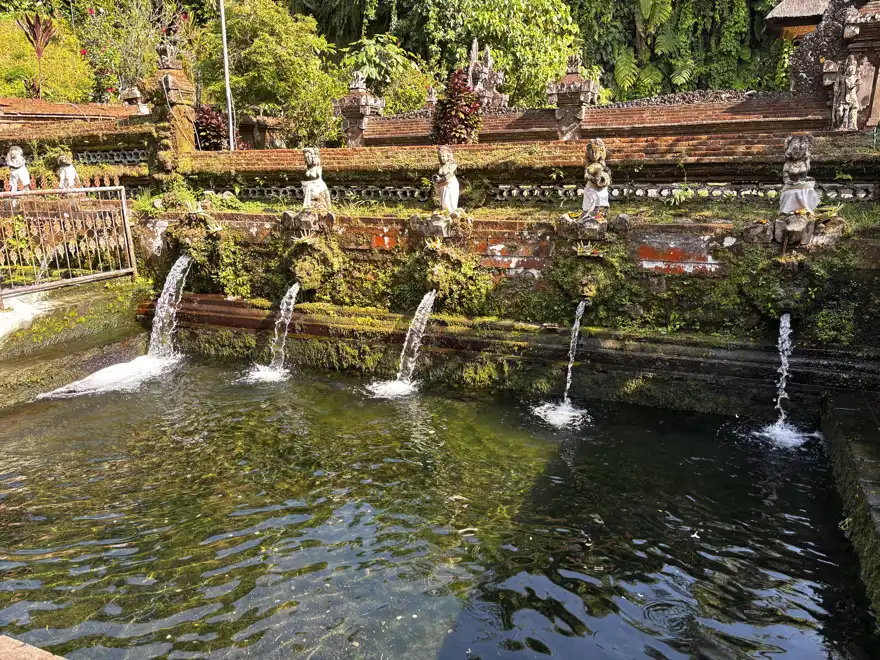
It's the same ritual, a fraction of the crowd. Mostly it's Balinese families here, not tour groups. The temple sits in a small river gorge, with a bathing pool fed by carved spouts and a melukat waterfall behind it.
This is a working place of worship, watched over by the goddesses Dewi Uma and Dewi Gangga. People come to melukat — a water-purification ritual meant to wash off bad energy before a fresh start. Entry is free; you leave a donation for the upkeep.
You change into a sarong, make a small offering, and then step into a stone pool below a line of carved spouts. You move along them one by one, ducking your head under each cold jet of spring water.
It's simple and it's genuinely moving, even if you're not religious. The water is cold enough to knock the breath out of you and quiet enough that nobody's talking.
Visitors are welcome at several of these spring temples around Ubud, as long as you treat it as worship and not a photo shoot. Early morning is best — the light is soft, the crowds are thin, and the water feels sharpest.
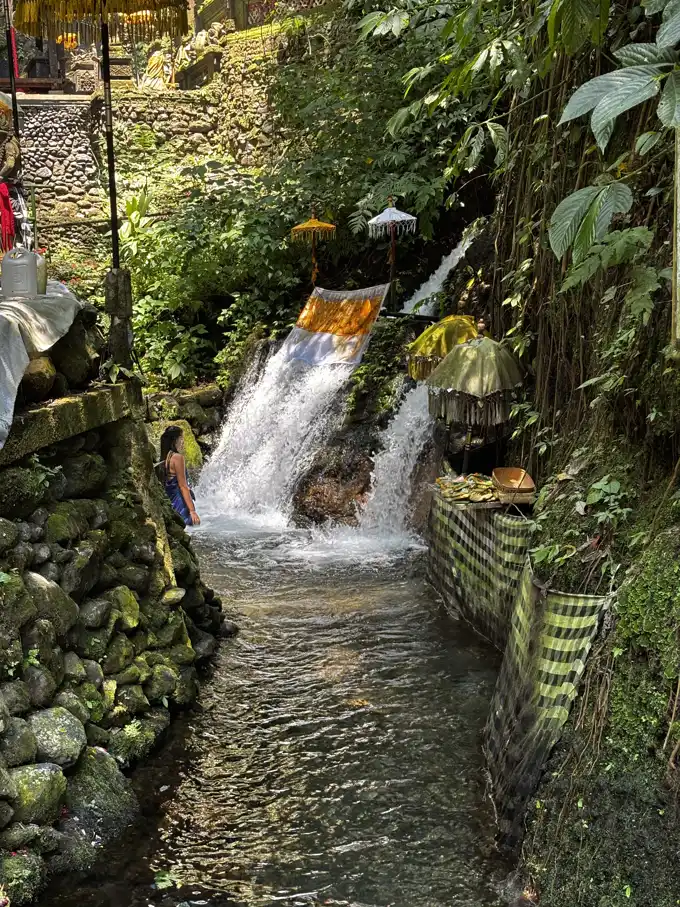
Melukat in Bali: What the Purification Ritual Involves
The order matters, and a temple helper or your driver will walk you through it. Broadly, it goes like this:
- Cover up first: a sarong and sash are required. You can rent or buy them at the entrance if you didn't bring your own.
- Make a small offering and set your intention before you get in — most people are quietly asked to focus on letting something go.
- Follow the spouts in order, left to right, ducking your head fully under each one. Some spouts are skipped — those are reserved for ceremonies for the dead, so watch what locals do.
- Keep phones out of the pool. A photo from the edge is usually fine; wading in with a camera to film yourself is not.
A couple of things people get wrong: women who are menstruating traditionally don't enter the pools, and you shouldn't point your feet at the shrines or climb on anything for a better angle. When in doubt, hang back and copy the family next to you.
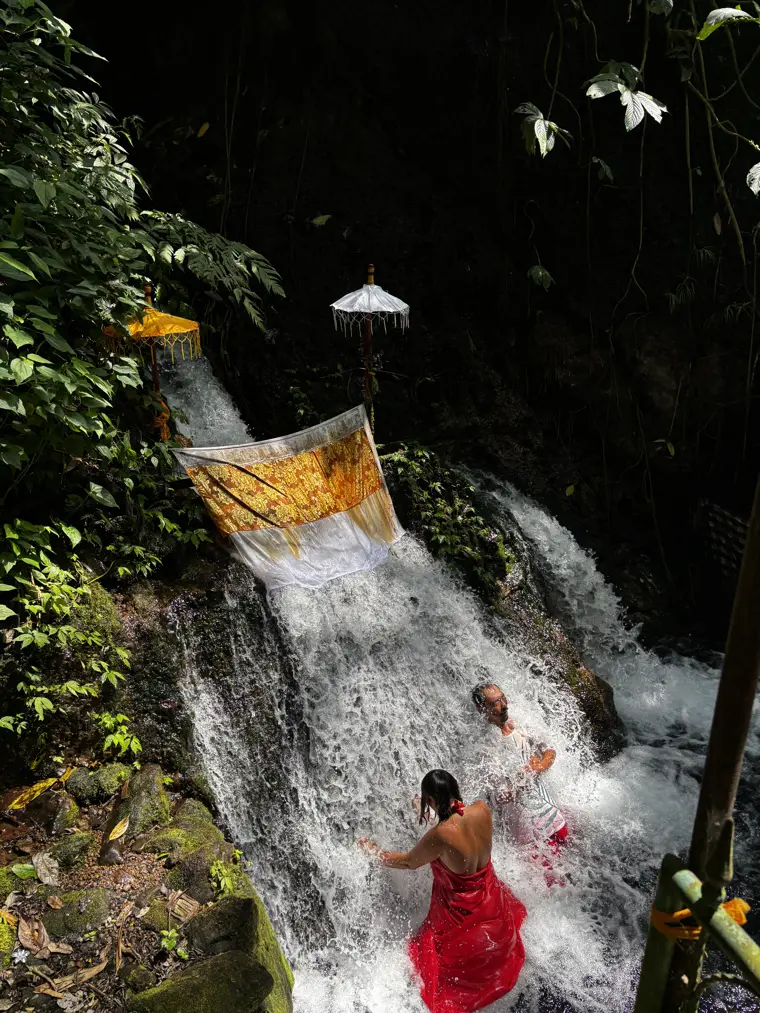
Want the cleansing done right, without guessing the etiquette? I'll set you up with a driver who knows the temple and can walk you through each step.
Plan my Ubud day 🤙The best waterfalls near Ubud
The Ubud and Gianyar hills hold the highest concentration of waterfalls in Bali, and most are an easy stop rather than a hike. These are the four I rotate through, all within about 45 minutes of Ubud:
- Kanto Lampo Waterfall — the terraced black-rock fan near Gianyar, about 20 minutes from Ubud. A short 5-minute walk down, and the most photogenic of the group. Entry is around IDR 20,000–30,000 per person.
- Tegenungan Waterfall — the wide, powerful fall closest to Ubud, roughly 15 minutes out. Easy to reach and a good choice if you're short on time.
- Tibumana Waterfall — a single curtain of water into a calm round pool, about 45 minutes from Ubud. Shady and quieter, it's a favourite for pre-wedding and Instagram photos, and the best of these for actually swimming.
- Tukad Cepung Waterfall — tucked inside a cave-like canyon where a beam of light drops through the gap onto the water. It's the one that fills Instagram feeds; go mid-morning for the light.
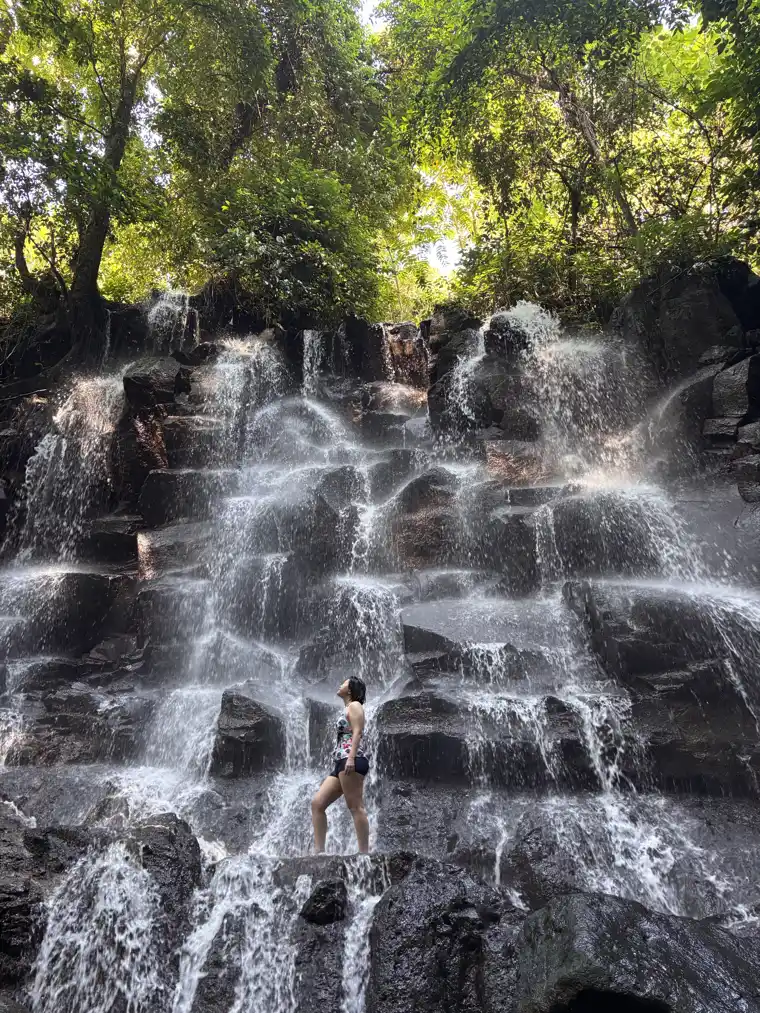
Entry to each waterfall is cheap. It's usually about IDR 20,000–30,000 per person, cash only, sometimes with a little extra for parking. Bring small notes, because the gates don't take cards.
Pick two to pair in one afternoon without rushing. If a swim matters more than the photo, ask for Tibumana or the lower pool at Kanto Lampo. If it's the picture you want, Tukad Cepung's light beam is the shot to time.
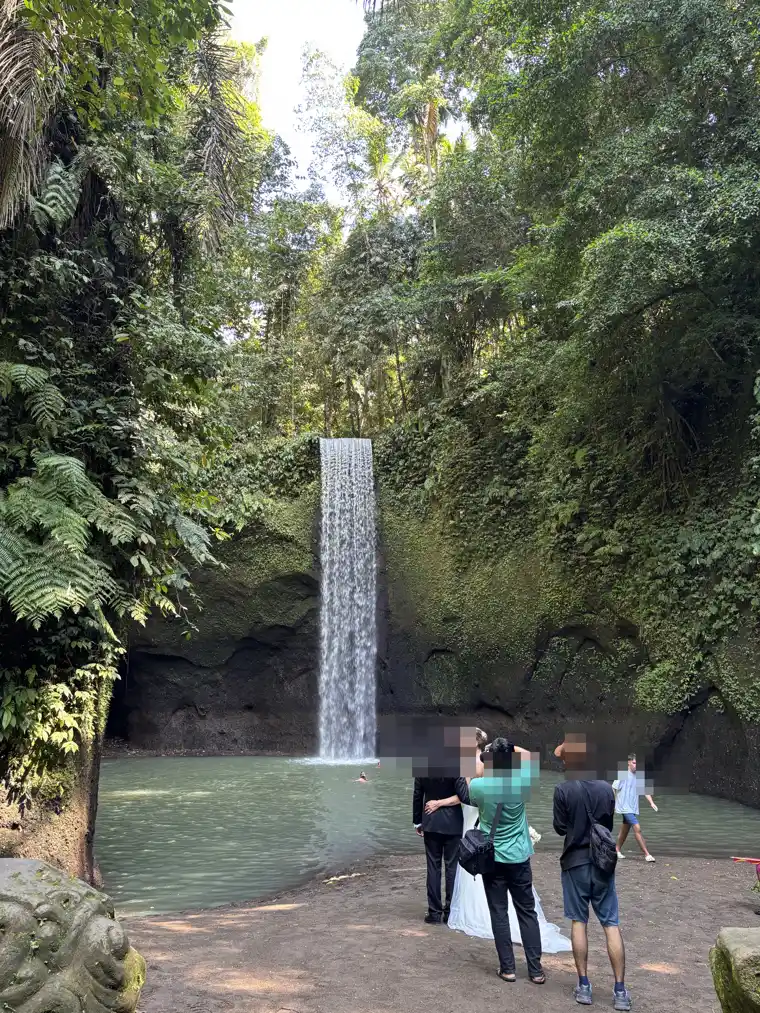
What to Wear for a Bali Holy Spring and Waterfall Day
This day has you at a temple and in a waterfall, so pack for both. Modest cover for the shrine, and something you're happy to soak.
- Swimsuit under your clothes — you wear it under the sarong for the cleansing and swim in it at the falls.
- A dry change of clothes and a towel. You'll be wet twice. A dry bag or plastic bag for the soaked set helps.
- Sandals or water shoes. Temple steps and waterfall stairs get slippery; flip-flops slide.
- A sarong and sash if you have them — otherwise rent at the temple gate.
- Small cash for offerings, entry fees and parking. Card is not accepted at the gates.
- Light layers. The hills are cooler than Kuta, and a morning by cold water can feel chilly.
Sebatu Holy Spring or Ubud Waterfalls First?
There's no wrong order, but the two options give you a different day.
Temple first, then falls is the calmer flow. You arrive at the spring temple early while it's cool and quiet, do the cleansing with a clear head, then spend a warm afternoon swimming under the falls. This is what I recommend for most people.
Falls first, then temple is the move if photos are the point. Early light in the gorges is soft and the falls are emptier, so you shoot first, then wind down at the spring temple afterwards. It's a longer morning start, but worth it for the pictures.
Either way, leave Kuta before dawn. It's a 1.5-to-2-hour drive up, and a first-light cleansing at Sebatu, before the heat and the crowds, is worth the early alarm. A late start turns a relaxed day into a rushed one.
How to Get from Kuta to Sebatu and Ubud Waterfalls
The Ubud area is about 1.5 to 2 hours from Kuta, and the spring temples and waterfalls sit a bit further north again, so plan on a full day out. The roads are narrow and winding once you climb into the hills.
A private driver is the sensible way to do it. You're not fit to ride a scooter two hours each way after a full day of steps and swimming, and the temples and falls are spread out enough that hailing rides between them is a headache.
As a guide on cost:
- Full-day private driver: roughly USD $45–65 for the car and driver for the day, split between everyone in the group. That's the honest local day rate, not a per-person tour price.
- Temple donation: a small amount, plus sarong rental if you need it.
- Waterfall entry: about IDR 20,000–30,000 per person, per fall, cash only.
Split between four people, a private driver for the whole day often works out cheaper than a packaged group tour — and you keep control of the pace, so you can linger at the fall you like instead of being marched back to a minibus. If you tell me your dates and group size, I'll set up a driver I trust and map a route that fits the day. You can read the honest run of prices for a driver and other activities on the activities and prices page, or plan the whole trip on the Bali trip planner.
Is This Ubud Day Trip Worth It? Andrew's Take
If you only leave the coast once on your trip, make it this day. The beach is why most people come to Bali. The hills are what they talk about after.
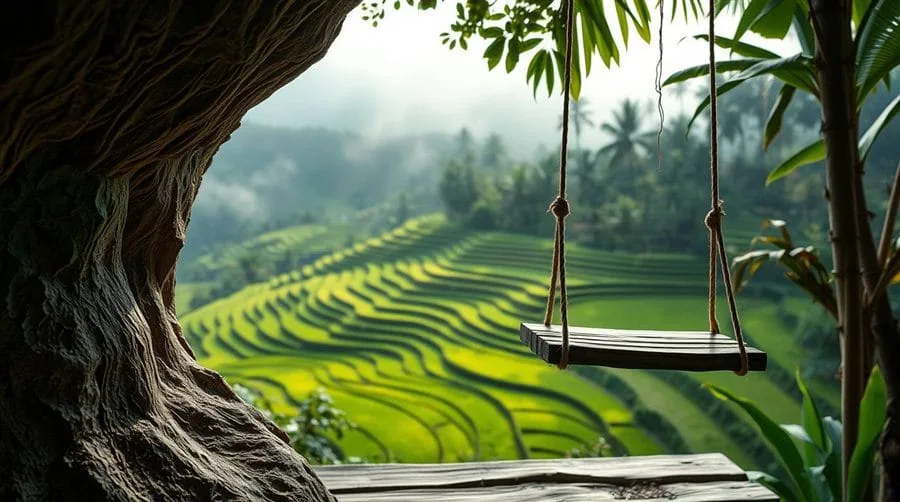
The mistake I see is people trying to bolt the temple and a waterfall onto a packed itinerary — a rice-terrace swing, three temples, a coffee stop, a monkey forest, all in one day. You end up rushing the two things worth slowing down for.
Keep it to a spring temple and one, maybe two waterfalls. Go early, take your time in the water, and let the day be quiet. That's the whole point of going up there.
Frequently Asked Questions
What is melukat in Bali?
Melukat is a Balinese Hindu water-purification ritual. You bathe under a line of spring-water spouts at a temple to wash off bad energy and start fresh. Visitors are welcome at several spring temples near Ubud as long as you wear a sarong, follow the order of the spouts and stay respectful.
How far is Ubud from Kuta?
The Ubud area is about 1.5 to 2 hours by car from Kuta, and the spring temples and waterfalls sit a little further north again. It's a full day out, which is why most people do it with a private driver rather than a scooter.
What should I wear for a holy spring temple and waterfalls?
Bring a swimsuit to wear under a sarong for the cleansing, a dry change of clothes, and sandals or water shoes for slippery steps. A sarong and sash are required inside the temple and are usually available to rent or buy at the entrance.
How much does an Ubud day trip from Kuta cost?
A full-day private driver from Kuta runs about USD $45–65 for the car and driver, split between everyone in the group. On top of that you have small temple donations and waterfall entry of about IDR 20,000-30,000 each. Message me for the local day rate rather than the tourist walk-up price.
Should I do the holy spring or the waterfall first?
Either works. Doing the water cleansing in the morning when the temple is quiet and cool is the calmer option, then the waterfalls in the afternoon. If you mainly want photos, flip it: shoot the falls in the soft early light and visit the spring temple after.
Can anyone take part in the water cleansing?
Visitors are generally welcome to melukat at the spring temples that allow it, believers or not, as long as you follow the etiquette. By tradition women who are menstruating don't enter the pools, and everyone covers up in a sarong and stays respectful — it's an active place of worship.
Is it better to visit in the wet or dry season?
The dry season (April to October) means easier roads and clearer pools. Waterfalls run harder and browner right after heavy wet-season rain, and some close if the current is dangerous, so in the wet months it's worth checking on the day.
Is Sebatu holy spring the same as Tirta Empul?
No. Tirta Empul is the large, famous purification temple in Tampaksiring that fills with tour groups. Pura Dalem Pingit Sebatu is a smaller, quieter holy spring in Sebatu village, about 25 minutes north of Ubud, where mostly Balinese families come to melukat. This day trip uses Sebatu, not Tirta Empul.
What are the best waterfalls near Sebatu?
Kanto Lampo is the closest and most photogenic, about 20 minutes away, where the water steps down black volcanic rock. Tegenungan, Tibumana and Tukad Cepung are the other well-known falls, all within roughly 45 minutes. Entry to each is about IDR 20,000–30,000, cash only.