People are surprised when I tell them Bali was never some ancient tattoo island. Walk through Kuta and you pass a studio every block, but that whole scene is younger than my parents. It grew out of surfers and backpackers, not temples.
So why does everyone seem to get inked here? I get asked this constantly, usually by someone already sitting in a studio chair. Here is the honest version: the history, the meaning behind the Balinese designs, and why Kuta in particular became the place people roll up their sleeves. For more local guides, see Getting Inked in Kuta, Bali and 10 Reasons to Get a Kuta Tattoo.
The short answer: it's tourism, not an ancient Bali tradition
Let me kill the myth first. A lot of studio websites will tell you Balinese tattooing goes back thousands of years, with sacred priests and warriors and the whole story. Most of that is stretched. Hindu Bali was never a big tattoo culture the way a couple of other Indonesian islands were.
What you see today is modern. The packed studios, the walk-in tourists, the full sleeves: that is maybe fifty years old, and it rode in on surfboards and cheap plane tickets. That does not make it less real or less meaningful. It just means the honest answer to "why so many tattoos in Bali?" is simple. A lot of young travellers come here, in a loose holiday headspace, next to skilled artists who charge a fraction of home prices.
- Tourism and surf culture, not ancient ritual, built the modern scene
- Balinese-Hindu symbols are where the designs get their meaning today
- Indonesia's genuinely old tattoo traditions live on other islands
How Kuta went from fishing village to ink capital
Kuta was a quiet fishing and trading village for most of its history. The turn came in the early 1970s. Word got out about the waves, an Australian filmmaker brought surfers to Uluwatu in 1971 and put Bali on the surf map, and young travellers started arriving in waves of their own.
Kuta was cheap, walkable, and minutes from the airport, so it became the first stop for backpackers crossing Asia. Guesthouses, warungs, surf shops and bars opened to serve them. And where you get a dense, young, foreign crowd looking for a souvenir of the best trip of their life, tattoo studios follow. That is the pattern in every backpacker town on earth. Kuta just did it faster and bigger than most.
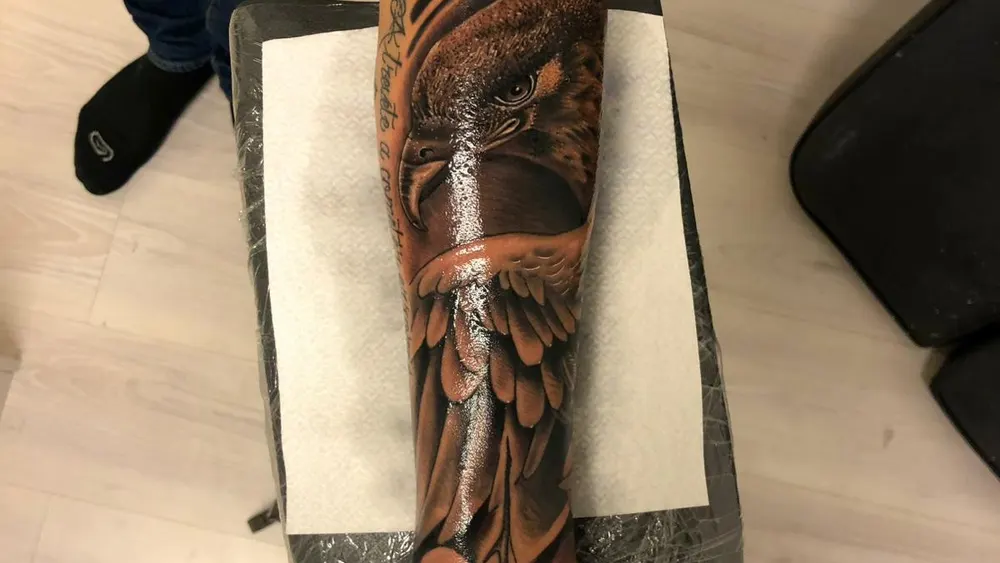
The surf connection is real
The surf link is not a coincidence. The people who chase waves are exactly the people who tend to get travel tattoos: young, adventurous, spending weeks here rather than days, and happy to mark a milestone on their skin. A lot of the early studios opened to catch surfers between sessions.
Even now, ask around a Kuta studio and half the walk-ins came to Bali to surf and decided to leave with something permanent too. Surfing also gave Bali its whole reputation as a place to be loose and free, away from the rules back home. That headspace, relaxed and open to something you might not do at home, is the same one that gets people into the chair.
Indonesia does have ancient tattoo roots, just not in Bali
Here is the part most people do not know. Indonesia is home to some of the oldest tattoo traditions on the planet. They are simply not Balinese.
The Mentawai people, on islands off Sumatra, have been tattooing for what researchers believe is thousands of years. Their titi markings are among the oldest living tattoo cultures anywhere. The Dayak of Borneo have their own deep tradition, with motifs drawn from nature and meant for protection and status. Those are real indigenous tattoo cultures with unbroken lines. Bali, culturally Hindu, sat outside that world. So when someone sells you a "thousand-year-old Balinese tattoo tradition," take it with a grain of salt. The genuinely ancient stuff is a couple of islands over.
- Mentawai (off Sumatra): titi tattoos, among the world's oldest living traditions
- Dayak (Borneo / Kalimantan): nature motifs for protection and status
- Bali: a Hindu culture, not historically a major tattoo society
What makes a tattoo 'Balinese': the symbols and their meanings
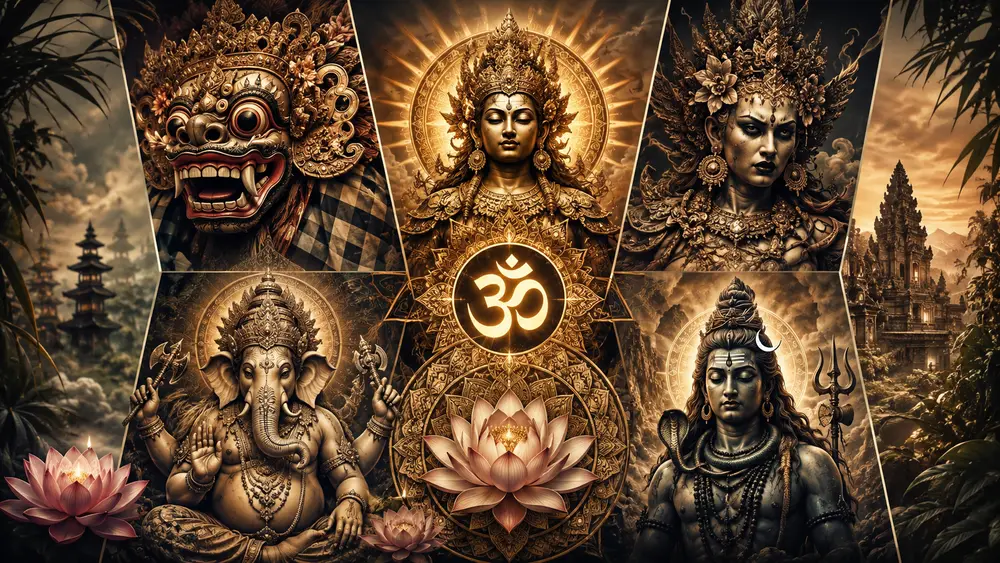
So what are people actually getting when they ask for a Balinese tattoo? Mostly it is Balinese-Hindu imagery adapted into modern tattoo styles. The meaning is genuine even if the trend is new. A few you will see everywhere in Kuta:
- Barong: the lion-like guardian spirit, a symbol of good and protection against evil
- Rangda: the demon queen and Barong's opposite, standing for the eternal balance of good and bad
- Acintya (Sang Hyang Widhi): the supreme god, shown as a radiant figure, the one source of everything
- Ongkara / Om: the sacred sound-symbol, used for spiritual protection
- Lotus and mandala: purity, and the geometry of the universe
- Hindu deities like Ganesha and Shiva, each with its own meaning (Ganesha removes obstacles)
Why travellers get inked here specifically
Put it together and Bali is almost built to make you get a tattoo. You are on the trip of the year, relaxed, a little sunburnt, surrounded by people already covered in ink. The artists are genuinely good now, the scene has matured into real talent, and the price is a fraction of what you would pay in Sydney, London or Taipei.
A small piece might run somewhere around USD $40 to 80. A bigger custom sleeve is charged by the hour and adds up, but it still lands well under home prices. And then there is the story. A tattoo you get in Bali carries a place and a moment with it forever. That is the real pull. It is not just cheaper ink, it is a souvenir you cannot lose.
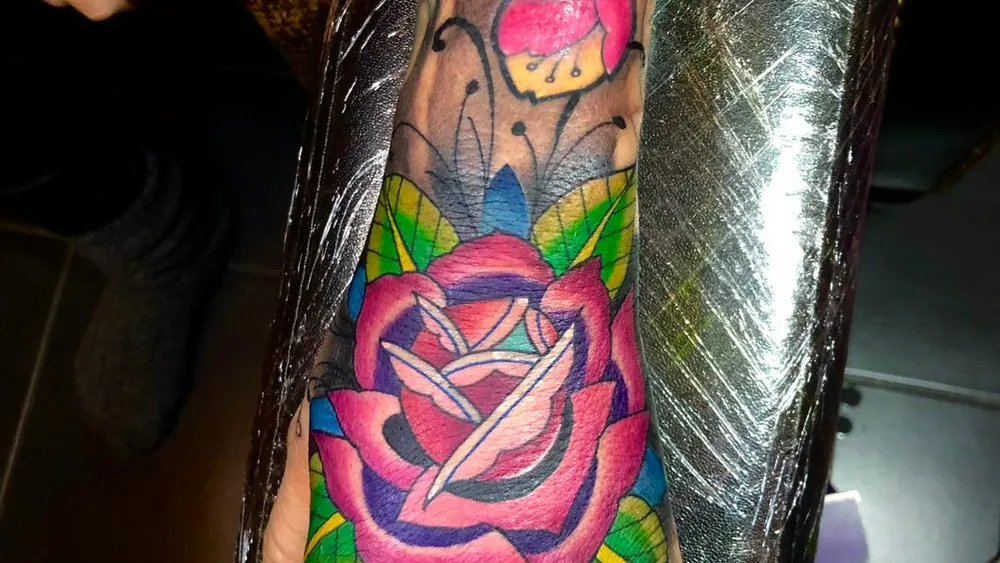
A local's honest take: meaning over trend
My honest advice, as someone who sends people to studios every week: do not get a Balinese sacred image just because it looked good in a photo. Balinese people take these symbols seriously, and putting a god on your calf as a holiday impulse can land wrong. If a design genuinely means something to you, brilliant, get it, and get it done properly. If you just want something that reminds you of Bali, a clean piece of art you love beats a half-understood sacred symbol every time.
The other half of the advice is boring but it matters more than the design. Pick a clean, professional studio. There are excellent artists in Kuta and there are rough walk-in spots, and the difference is your health, not just the art. That is the part I can actually help with. I know which studios are hygienic and which artist suits which style, so you are not gambling with your trip.
Sources and further reading
A few of the non-tourist sources behind this piece, if you want to dig deeper. Kuta's shift from fishing village to surf town is documented in an academic study, Kuta, Bali: From Port City to Surf City (Diponegoro University), and in The Bali Times. The claim that the Mentawai hold one of the world's oldest living tattoo traditions is attributed to researcher Ady Rosa of Padang University, reported by Indonesia Sentinel and Facts and Details. The symbol meanings come from general Balinese-Hindu cultural knowledge, not from any single studio.
Frequently Asked Questions
Is tattooing part of traditional Balinese culture?
Not in the way it is for the Mentawai or Dayak people elsewhere in Indonesia. Hindu Bali was not historically a major tattoo society. The Kuta scene you see today is modern and grew out of surf and backpacker tourism over the last fifty years or so.
What do Balinese tattoo symbols actually mean?
Most come from Balinese-Hindu belief. Barong is a protective guardian spirit, Rangda is his demonic opposite, Acintya is the supreme god, and Om or Ongkara is a sacred protective symbol. Lotus and mandala stand for purity and the order of the universe. A good artist will talk the meaning through before drawing.
Why is Kuta the tattoo area?
Density. Kuta has been the surf and backpacker hub since the 1970s, so it has the biggest concentration of young travellers, and the studios followed the crowd.
Is it cheaper to get a tattoo in Bali?
Usually yes. A small piece might be around USD $40 to 80, and larger custom work is charged by the hour but still tends to come in well under prices in Australia, the UK or Taiwan. Do not choose on price alone though. Hygiene and skill matter more.
Is it safe to get a tattoo in Kuta?
It can be, if you pick a proper studio: sealed needles, gloves, clean surfaces and a portfolio you can actually see. There are great professional artists here and some rough spots, so it is worth being matched to a vetted studio rather than wandering in off the street.