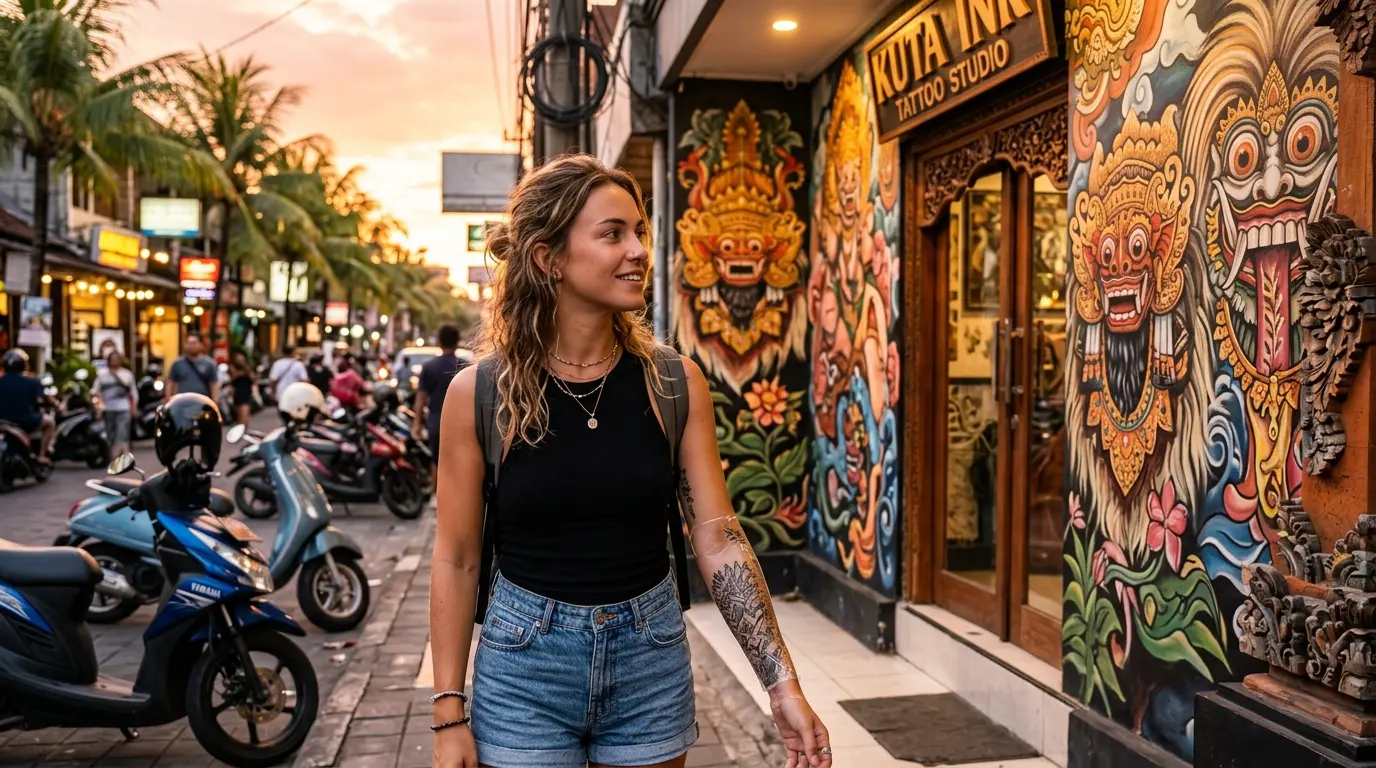
For a lot of first-time visitors, Bali is the easiest introduction to Southeast Asia. The flights are short. There's barely any culture shock in the tourist areas. A week here still costs less than a week at home.
That ease is exactly why people switch off. Then they get caught by the few things that trip up first-timers every season: the visa and tourist levy, dodgy money changers, scooter spills and a bout of Bali belly.
I'm a local guide based in Kuta and I look after a lot of first-timers. So here's the honest, practical rundown. What to sort before you fly, what things really cost, and how to keep the trip smooth.
For more local guides, see 4 Days in Bali Itinerary 2025 and Things to Do in Kuta, Bali.
Why Bali is an easy first trip
There's a reason Bali is so many people's first big overseas trip. It's a short hop from Australia (Perth is around three and a half hours) and well-connected across Asia, with plenty of options from further afield.
The time difference from most of Asia and Australia is small. You land ready to go rather than wrecked. It's also warm year-round, so there's no bad season to fly into, only a wetter one.
Value is still the clincher. Even with prices creeping up, food, drinks, massages and activities cost a fraction of what they do back home. That's why a mid-range week here goes a long way.
The trick is spending like someone who knows the local price, not the tourist one. That's most of what this guide is about.
- Short flights from Australia and well-connected across Asia
- Small time difference from most of Asia/Australia — little to no jet lag
- Warm all year; dry season April–October is the easiest weather
- Still excellent value if you avoid the tourist markup
Visa, passport and the tourist levy (2026)
Most visitors arrive on a Visa on Arrival (VOA). That includes Australians, Brits, Americans and most of Europe. It costs about USD $35, gives you 30 days, and can be extended once for another 30.
You can buy it on arrival or pre-pay the e-VOA online to skip a queue. Your passport needs at least six months' validity and a blank page. Check your own nationality's rules before you fly, but for most Western travellers the VOA is the path.
On top of the visa there's a one-off Bali tourist levy of IDR 150,000 (about USD $10) per person. Pay it through the official Love Bali app or website before you fly, or at the airport. Just keep the QR receipt.
There's also a quick online customs/health arrival declaration to fill in. None of it is hard. Sorting it before you land just saves standing in lines at the other end.
- VOA about USD $35, 30 days, extendable once (most Western nationalities)
- Passport: 6 months' validity + a blank page
- Tourist levy IDR 150,000 (~USD $10) — pay via the official Love Bali app/site
- Do the e-VOA, levy and customs declaration online before you fly
Money: rupiah and not getting ripped off
Bali runs on Indonesian rupiah, and the big numbers throw people. An ATM withdrawal can hand you a couple of million at a time. Major currencies (USD, AUD, GBP, EUR) all change well here, but where you change them matters.
Use a proper authorized money changer with a posted rate and a real shopfront. Count every note yourself before you leave the counter. Walk away from the tiny booths down a side alley advertising a rate that's too good: that's the classic short-change setup.
Cards work in hotels, bigger restaurants and malls. Warungs, markets and most drivers want cash. ATMs are fine and often give a better rate than a changer, so take larger amounts to spread the withdrawal fee.
As a rough sense of spending, a relaxed mid-range day runs around USD $60–110 a person. That covers food, a couple of drinks, transport and one activity.
- Use authorized money changers with a real shopfront; count notes yourself
- Skip the back-alley “too good” rates — that's the short-change scam
- Cash for warungs, markets and drivers; cards in bigger venues
- Budget roughly USD $60–110 per person per day mid-range
First trip to Bali? Andrew can meet you at the airport and get day one sorted — so you land straight into your holiday instead of haggling with taxi touts.
Plan my trip 🤙Where to base yourself for a smooth first trip
If it's your first Bali run, or you just want easy, Kuta or Legian is hard to beat as a base. It's central, walkable and the most budget-friendly part of the south. It has the gentlest beginner surf on the island and sits ten minutes from the airport.
From here you can sort everything without long transfers: surf, food, a driver, a tattoo, day trips.
Seminyak is a step up in price and polish. Canggu is the cafe-and-scooter crowd. Uluwatu is clifftop and spread out.
They're all worth a visit. But as a home base for a first, smooth trip, Kuta and Legian keep things simple and cheap.
- Kuta / Legian: central, walkable, cheapest in the south, near the airport
- Best beginner surf and easiest to arrange everything locally
- Seminyak pricier; Canggu hip; Uluwatu clifftop and more spread out
- Day-trip the rest from a Kuta base rather than moving hotels constantly
Skip the scooter stress and the Grab roulette — Andrew can line up a trusted driver for a day or your whole trip, at the local rate. Just send your dates.
Sort my driver 🤙Getting around: scooters, Grab and drivers
Scooters are cheap and everywhere. They're also how a lot of first-timers end up with “Bali tattoos”: gravel rash. If you ride, wear a proper helmet and have an actual motorcycle licence.
Know that most travel-insurance policies won't pay out if you were unlicensed or had a drink. The roads are chaotic and it's not the place to learn.
For most people the easy answer is Grab and Gojek, the local ride apps. They're cheap, metered and take the haggling out of every trip.
For a day of temples or sights, hiring a driver who waits for you is relaxed. Split between a few people, it's not expensive. I'm happy to line one up at the local rate so you're not negotiating in the heat.
- Scooters are cheap but first-timers crash them constantly — licence + helmet, no drinking
- Insurance often voids unlicensed/under-the-influence scooter claims
- Grab / Gojek apps are cheap and hassle-free for getting around town
- A waiting driver is the easy way to do temples and day trips
Staying safe and healthy
“Bali belly” is the most common thing that derails a trip, and it's usually avoidable. Drink bottled or filtered water. Be a little careful with ice and raw salads at the cheapest spots early on, and pack rehydration sachets just in case.
The traffic is the real physical risk. Cross carefully and don't assume anyone will stop.
The non-negotiable is travel insurance. A serious scooter accident or illness can mean a medical evacuation that runs into tens of thousands of dollars. That's the one thing you can't sort after the fact.
Get a policy that genuinely covers Bali and any activities you'll actually do. And keep an eye on your drink in the busy Kuta bars like you would anywhere.
- Bottled/filtered water; ease into street food; pack rehydration sachets
- Traffic is the biggest day-to-day risk — cross carefully
- Travel insurance is essential — medical evac can cost a fortune
- Check the policy actually covers scooters/activities you'll do
Don't be “that” tourist
Bali is welcoming, and a little respect goes a long way. It's also the difference between getting the local price and the tourist one. Cover your shoulders and knees at temples; most lend a sarong.
If your trip lands on Nyepi, the Balinese Day of Silence, the whole island shuts down for 24 hours, including the airport. Plan around it and stay in.
The other thing: Kuta has a big-night reputation. But the travellers who have the best time are the ones who don't treat it like a blowout.
Bargain politely, eat at the local warungs, and tip when something's good. You'll get looked after. That's the version of Bali worth coming back for.
- Temples: cover shoulders and knees; a sarong is usually provided
- Nyepi (Day of Silence): the island and airport close for 24 hours — plan around it
- Bargain politely and support local warungs — it's repaid in service
- Keep the big nights in check; respect gets you the local treatment
Frequently Asked Questions
Do I need a visa for Bali?
Most Western travellers (Australians, Brits, Americans, most of Europe) arrive on a Visa on Arrival, about USD $35 for 30 days, extendable once. You can pre-pay the e-VOA online. On top of that there's a one-off Bali tourist levy of IDR 150,000 (about USD $10) per person, paid through the official Love Bali app or site. Check your own nationality's rules, and make sure your passport has six months' validity.
How much spending money do I need for a week in Bali?
As a rough guide, a relaxed mid-range day — food, a couple of drinks, transport and one activity — runs about USD $60–110 per person, so roughly USD $400–800 for a week excluding flights and hotel. You can do it for much less on warungs and Grab, or far more in Seminyak.
Is Bali safe for first-time visitors?
Generally yes. The biggest real risks are scooter accidents and Bali belly rather than crime. Wear a helmet and only ride with a licence, drink bottled water, watch your drink in busy bars, and take out proper travel insurance that covers medical evacuation.
When is the best time to visit Bali from Australia?
The dry season, roughly April to October, is the most reliable for sun and calm water, with July–August the busiest and priciest. The wet season still has plenty of fine days and fewer crowds, just with afternoon downpours. Avoid arriving on Nyepi unless you want a forced quiet day.
Can I use my Australian phone and pay by card in Bali?
Grab a local SIM or an eSIM at the airport — data is cheap and you'll want it for Grab and maps. Cards work in hotels, malls and bigger restaurants, but carry cash for warungs, markets and drivers. ATMs are easy; withdraw larger amounts to spread the fee.