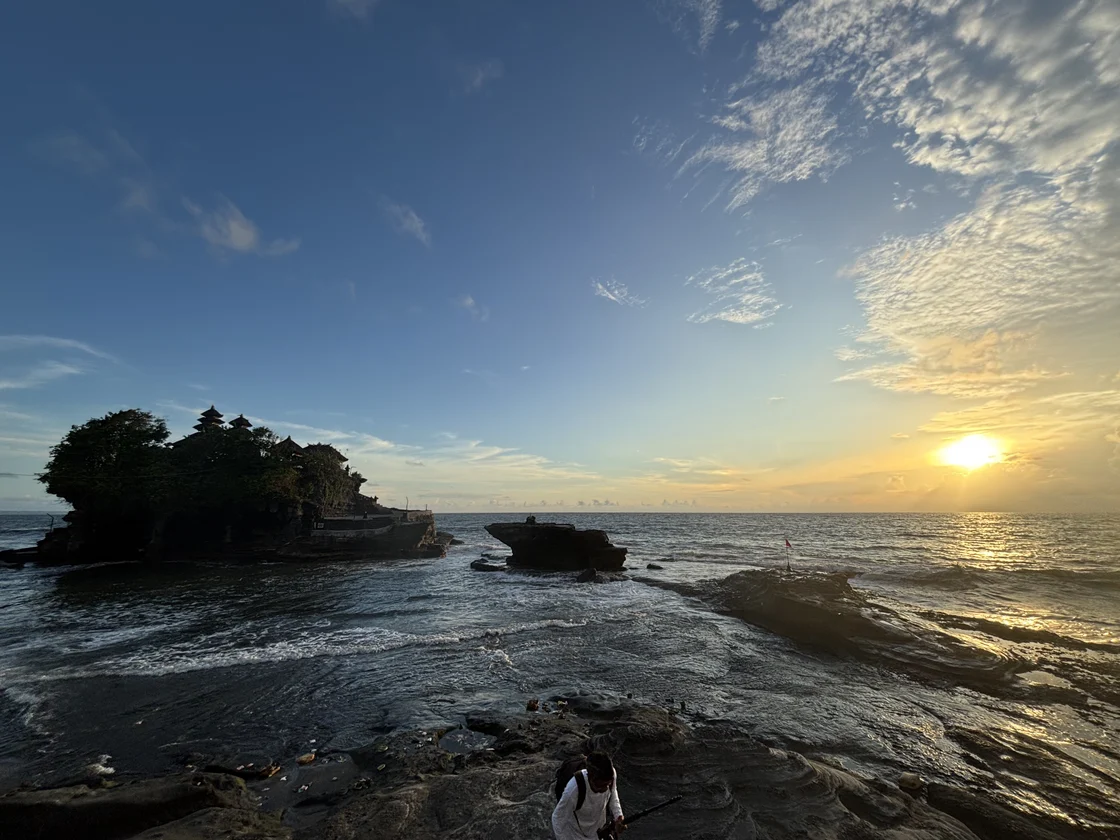
Tanah Lot is the temple that sits on its own rock in the sea, about an hour north-west of Kuta. At low tide you can walk across to the base of it. At high tide the sea closes that path and you watch from the cliff instead.
That one detail decides what your visit looks like, and almost nobody checks it before they go.
Here's what the place actually is, the tide rule, the cliff temple most people walk straight past, and what happens here in the days before Nyepi. If this is your first trip, my Bali first-time visitor guide and 4-day Bali itinerary cover how a run like this fits around the rest of the week.
What Tanah Lot Actually Is
Tanah Lot Google Maps →
Tanah Lot sits off the beach at Beraban, a village in the Tabanan regency on Bali's south-west coast. The name means "land in the sea", which is exactly what it is: a dark rock sitting offshore with a small temple on top of it.
It's one of the sea temples that ring the coast of Bali, and it's dedicated to the sea gods. The temple is not a place tourists go inside. Only worshippers go up to the shrine itself, so what visitors do here is walk the shore, cross to the base when the tide allows, and watch it from the cliff.
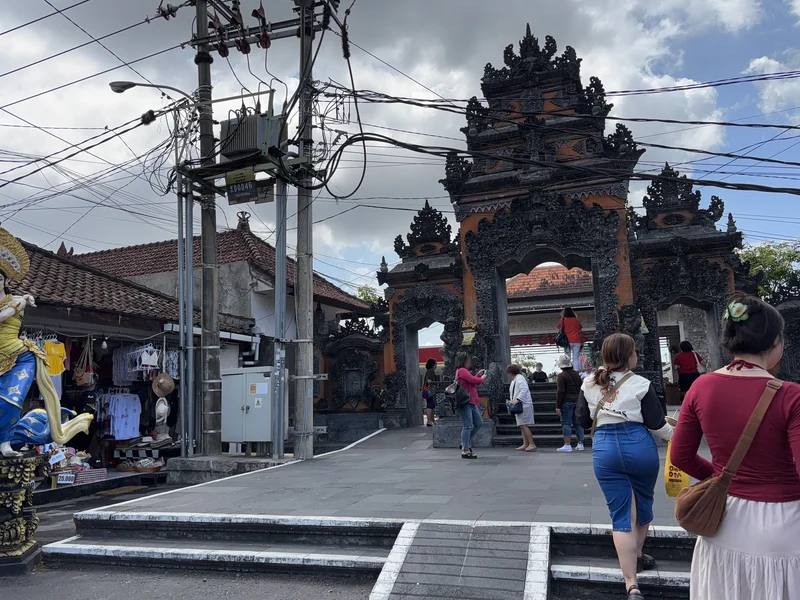
The site around it is set up for visitors: a long market street of stalls on the walk in, gardens along the cliff, food stalls and toilets.
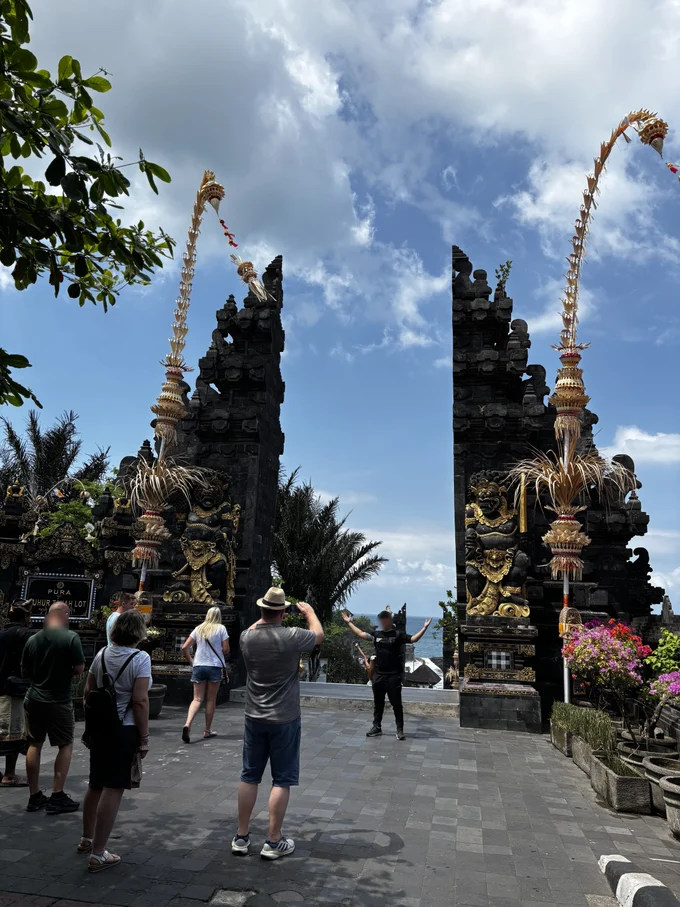
You come in through a candi bentar, the split gate that's cut down the middle so you walk between the two halves. Gold guardian figures sit on either side, penjor bamboo poles arch overhead, and the sea is straight through the gap — it's the photo most people take before they've even seen the rock.
Tickets, Hours and What to Wear
The site is open daily from 7am to 7pm, which is built around sunset — the gate stays open past the last light.
As of September 2026, entry is about USD $4–5 per adult and USD $2–3 per child, with parking charged separately at a much smaller rate. Rates are reviewed from time to time, so check the official ticket page before you go rather than treating that as a quote.
Bring local cash in small notes. Cash is the safe assumption at the booth — card and QR payment aren't something to count on here.
You don't need to hire a guide to walk around. A guide is useful if you want the stories on site rather than in advance.
On clothing: you're at a temple complex, so cover your shoulders and knees. Visitors don't go into the shrine itself, so you won't always be asked for a sarong on the grounds. If one is required for the blessing area or on a ceremony day, follow what the temple staff ask for at the time; sarongs are available at the entrance.
The Legend: a Priest, a Rock and a Sea Snake
The story that comes with Tanah Lot is legend rather than record, and it's the one every guide here tells.
Local tradition links the temple to Dang Hyang Nirartha, a Javanese priest who travelled through Bali teaching in the late 15th or early 16th century. He stopped at this stretch of coast and meditated on a rock by the shore. Villagers came to hear him, which did not please the local leader, who told him to leave.
In the story, Nirartha moved the rock he was sitting on out into the sea, and stayed there to finish his meditation. He is then said to have turned his sash into sea snakes to guard the rock. Guides here will tell you the snakes still live in the crevices at the base of it.
Whether or not that lands for you, it explains the shape of the visit: the rock is treated as protected ground, and the spring at its base is treated as holy water.
The Tide Decides Your Visit
This is the part worth planning around, and it's the thing I tell every guest before they go.
At low tide, the sea pulls back off the rock shelf in front of the temple, and when conditions are safe that shelf opens for the walk across to the base of the rock. Down there, priests give a blessing at the freshwater spring: holy water on your hands and head, a few grains of rice pressed onto your forehead. It's the closest you get to the temple itself.
At high tide, that shelf is under water and the crossing is closed. You stay on the shore and the cliff, and the rock looks like it's floating — which is the photo everyone knows.
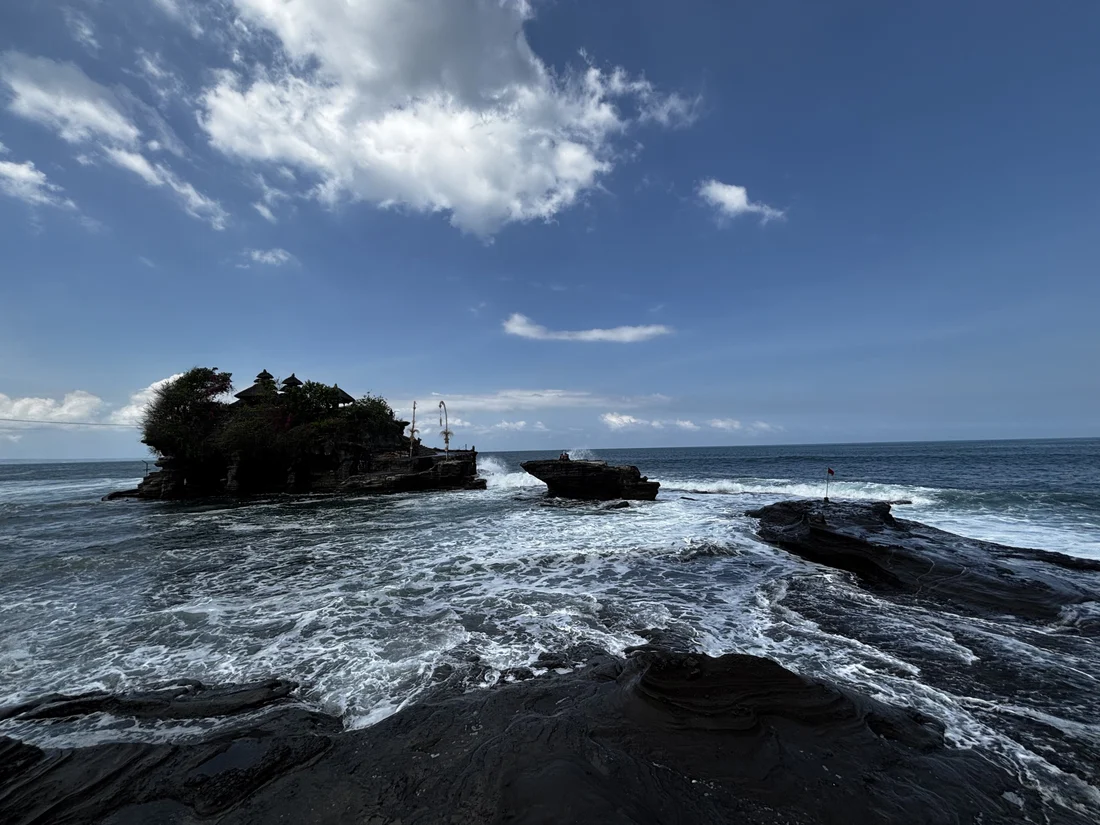
Don't try to walk out to the rock when the sea is up. The swell here comes in hard against the rocks, the black rock is slippery under a film of water, and the gaps between the shelves fill fast. Photos don't show how much force is in it.
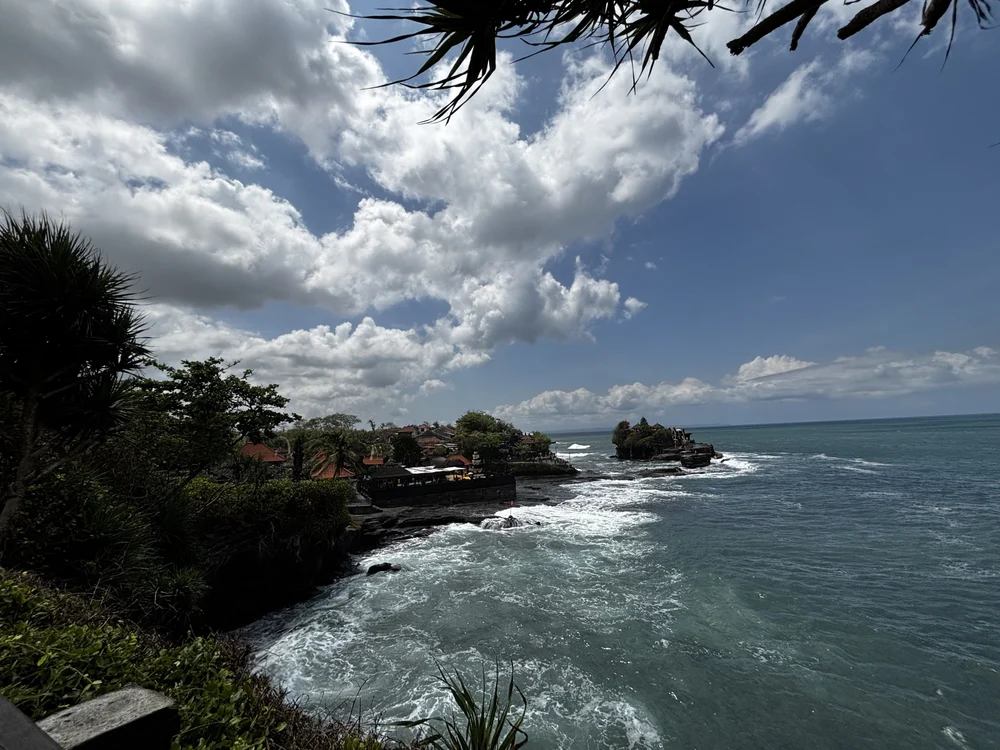
Low tide doesn't guarantee the crossing either: a big swell can keep the shelf closed on a falling tide, and the staff on the day have the final word.
Both versions are worth seeing. They just aren't the same visit, so check a tide chart for the day you're going before you decide what time to leave. The nearest tide station for this coast is Denpasar — the 30-day tide table at tide-forecast.com covers it.
The Cliff Temple Most People Walk Past
Follow the clifftop path north from the main viewpoint and you reach a second temple. Far fewer people go this way.
Pura Batu Bolong Google Maps →
Pura Batu Bolong sits out on a natural rock arch that runs into the sea. Batu bolong means "hollow rock": the sea has cut a hole clean through the headland underneath it, and the waves run through the gap below your feet.
It is also the better angle on Tanah Lot itself. From this side you get the rock, the temple and the surf in one line, with the cliff gardens in the foreground.
Same rule as the main rock: stay on the marked path and behind any barrier. The stone goes slick after rain or sea spray, the edge is unfenced, and the arch itself is temple ground rather than a walkway.
Melasti: Tanah Lot Before Nyepi
A few days before Nyepi, Bali's day of silence, villages carry their temple's sacred objects down to the sea to be purified. The ceremony is called Melasti, and Tanah Lot is one of the places it happens.
It doesn't look like a tourist event, because it isn't one. The procession comes down the same walkway visitors use: whole villages in white and yellow, ceremonial umbrellas, gamelan, the temple's sacred objects carried on platforms, and then everyone sits on the ground facing the sea while the priests work.
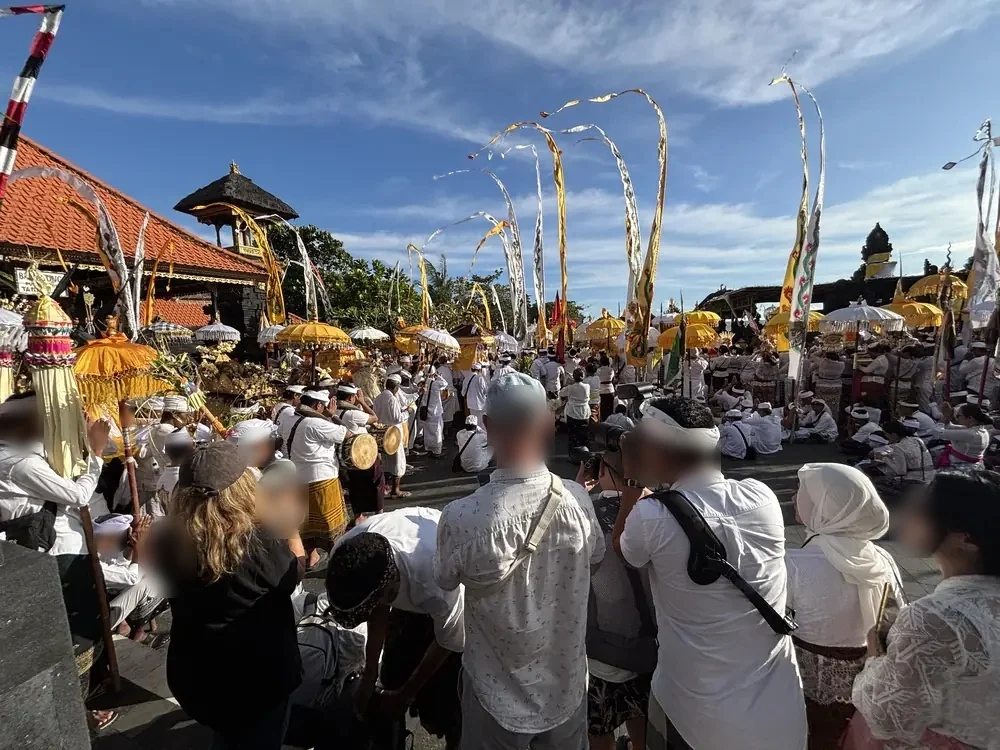
You can watch. You're not in the way as long as you stay behind the worshippers, don't walk through the procession, and don't put a camera in anyone's face. Wear a sarong and sash the same as any temple visit, and dress like it's a ceremony rather than a beach day.
Nyepi falls on 8 March in 2027. Melasti is normally held in the days leading up to it, but the exact procession date and time at Tanah Lot are set locally, so ask on the ground or check the official Tanah Lot event calendar before you build a trip around it. If your dates land in that week, this is the reason to come here rather than for the sunset. My Nyepi and ogoh-ogoh guide covers the rest of that week, including what shuts down and when.
Getting There from Kuta and When to Go
Tanah Lot is roughly 28 km from Kuta. Allow 50–65 minutes when the road is moving, and 90 minutes to two hours in the late-afternoon rush, when every car on the coast is heading the same way.
It's not on a practical public-transport route, so it's a driver, a taxi app or a scooter. One thing to know about the apps: Grab and Gojek can usually drop you off, but pickups at the car park are often refused by the drivers based there, and you may be asked to walk out a few hundred metres to meet the car. If you're staying through sunset, having a return driver already waiting is the simpler answer.
Timing is the trade-off:
- Late afternoon gets you the sunset everyone comes for, along with the crowds and the parking queue on the way out.
- Morning is quiet, the light is clean on the rock, and if the tide is out you'll have the crossing without a line for the blessing.
The drive is the expensive part of the day, not the ticket, so most people pair it with something else on the same run:
- Half day: Canggu or Pererenan in the afternoon, then Tanah Lot for sunset.
- Full day: Taman Ayun, the Jatiluwih rice terraces, then down to Tanah Lot.
- Easy version: a long lunch on the way up, Tanah Lot, home after dark.
If you'd rather not drive it yourself, this is exactly the kind of run I sort for guests: a driver who knows when to leave Kuta so you're not stuck in the sunset queue.
Andrew's Take
Check the tide first, then decide your time. If the tide is out in the morning, go in the morning — you get the crossing, the blessing and a quiet site, and you're not fighting the sunset crowd for a place at the rail.
If you only get the late slot, go early enough to walk the cliff path to Batu Bolong before the light goes. That's the view worth having, and most people never get past the first viewpoint.
Want it arranged with a driver from Kuta, timed around the tide? Message me on WhatsApp with your dates.
Frequently Asked Questions
Can you walk to Tanah Lot temple?
At low tide, and when conditions are safe, the rock shelf opens and you can walk to the base of the rock, where priests give a holy-water blessing at the spring. You cannot go up into the temple itself — that part is for worshippers. At high tide the crossing is under water and closed, and a big swell can close it even on a low tide.
What time should you visit Tanah Lot?
The site is open 7am to 7pm. Late afternoon is the sunset slot and the busiest. Mornings are quiet, and if the tide is out you get the crossing without the queue. Check a tide chart for your date before choosing.
How much is the entrance fee at Tanah Lot?
As of September 2026 it is about USD $4–5 for an adult and USD $2–3 for a child, paid in cash at the booth, plus a small parking fee. Rates change, so check the official ticket page before you go. Entry is separate from any driver or tour cost.
What is the ceremony at Tanah Lot before Nyepi?
Melasti — a purification procession that brings a village's sacred temple objects down to the sea in the days before Nyepi. Nyepi is on 8 March in 2027; the exact Melasti date and time at Tanah Lot are set locally, so confirm them on the ground. Visitors can watch from behind the worshippers in respectful dress.
How far is Tanah Lot from Kuta?
Roughly 28 km, which is 50–65 minutes when the road is moving and 90 minutes to two hours in the late-afternoon sunset rush. There is no practical public transport, so most people go with a driver, a taxi app or by scooter — though app pickups at the car park are often refused.